
Summary:
Consider a medical massage when pain lasts more than a few weeks, follows an accident or injury, or keeps returning despite rest and stretching. Medical massage uses targeted techniques to address pain, muscle tension, and movement restriction as part of a broader care plan.
When pain becomes part of your daily routine, it’s easy to stop noticing how much it’s changing your life. You adjust the way you sleep, move more carefully, skip activities you once enjoyed, and simply hope tomorrow feels better. But persistent pain doesn’t always disappear with time. If soreness, muscle tension, or injury-related discomfort continues despite your usual efforts, massage therapy for pain relief may be worth considering.
This targeted approach focuses on problem areas to support movement, ease soft-tissue tension, and complement a broader pain-management plan.
What Is Medical Massage Therapy?
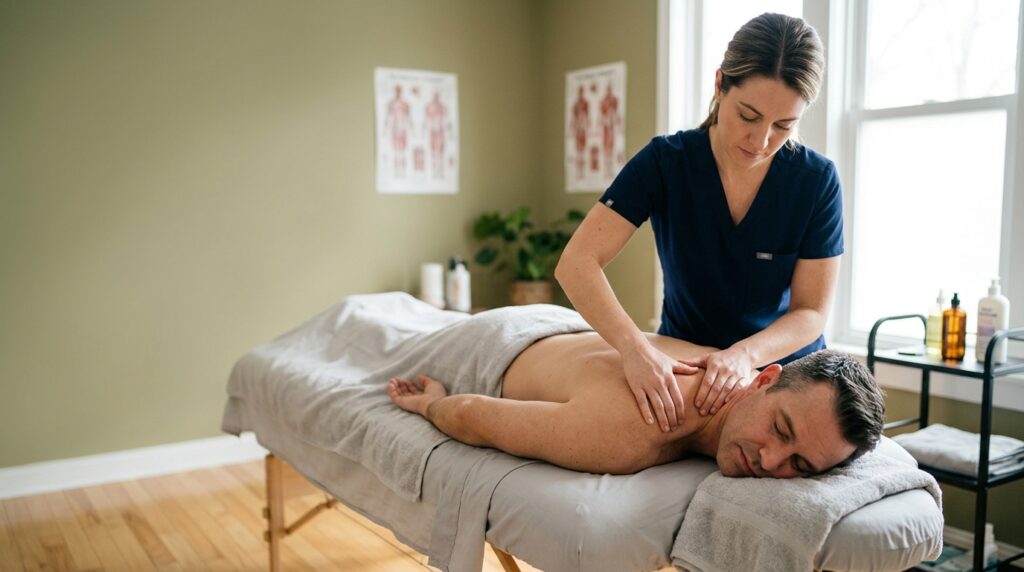
It takes a targeted approach to pain and recovery. Instead of providing general relaxation, it focuses on a specific injury, condition, or pain pattern and uses techniques selected for your needs. It may be used after auto accidents, slips, falls, and other injuries, as well as for chronic pain that hasn’t improved with time. Common treatment areas include the neck, shoulders, knees, hips, lower back, and muscles affected by whiplash.
The goal isn’t simply to make you feel better for an hour. Medical massage works on areas of tension and soft-tissue restriction that may develop after an injury or prolonged strain. With a focused treatment plan, it can complement other care and support better movement and recovery.
Signs You Might Need a Massage for Persistent Pain
A few signs tend to show up again and again in people who could benefit from massage for pain.
- Pain that lingers for weeks after an accident, fall, or strain
- Stiffness or restricted movement that has not improved with stretching
- Chronic tightness in the neck, shoulders, hips, or low back
- Whiplash symptoms following a car accident
- Discomfort that returns shortly after it seems to ease up
During 2021, an estimated 20.9 percent of U.S. adults experienced chronic pain, and 6.9 percent experienced high-impact chronic pain that substantially restricted daily activities. If these signs sound familiar, your body may need more targeted attention than rest alone can provide.
What Research Says About Massage and Pain
Medical massage is not just a comfort measure. A growing body of clinical research backs its use for pain management.
| Research | Key finding |
| 2016 systematic review and meta-analysis, Pain Medicine | Included 67 studies and found massage therapy reduced pain compared with no treatment and showed smaller benefits compared with sham or active treatments. |
| American College of Physicians guideline | Massage is an option for acute/subacute low-back pain, but the guideline does not recommend it for chronic low-back pain. |
| Knee osteoarthritis randomized trial | Massage improved pain, stiffness and physical function after an 8-week treatment period, although longer-term differences were not maintained at 52 weeks in that trial. |
| Whiplash cohort study | A stronger therapeutic relationship was associated with greater odds of recovery, but this does not prove that massage itself caused better recovery. |
Evidence is stronger for some conditions than others. Compared with placebo treatment, massage may show little difference for subacute or chronic neck pain specifically, so results vary by condition.
What to Expect During a Session
Every session starts with genuine attention, not a rushed process.
· A Real Conversation First
A proper first visit starts with an in-depth conversation, not a rushed intake form. A skilled practitioner takes time to understand your pain points, medical history, and goals, since persistent pain rarely has one single cause. Research on whiplash recovery has found that the therapeutic relationship between patient and practitioner is linked to meaningfully higher odds of recovery.
· Targeted, Area-Specific Work
Once your situation is understood, the session focuses on the areas that need it most, concentrated work on your neck and shoulders after a car accident, or attention to your hips and low back from settled tension. The pace is careful and deliberate, never rushed.
Looking for a massage therapist in Broomfield who listens to your concerns and understands what you’re experiencing? Reach out to Heart of Healing Therapeutics today to schedule your first visit and discuss how massage therapy may support your needs.
What Causes Persistent Pain?
Auto accidents, falls, and sports injuries can leave soft tissue damage that takes far longer to resolve than the initial injury. Whiplash-associated symptoms can occur after motor-vehicle collisions and may include neck pain, stiffness and reduced movement. Persistent or worsening symptoms should be evaluated, while massage may be considered as part of an appropriate treatment plan.
Years of poor posture, repetitive movement, or unmanaged stress build up gradually, often without a clear starting point, which is part of why it’s stubborn to resolve on its own.
Top Benefits of Medical Massage for Pain
The right massage approach can do more than provide temporary comfort when pain keeps coming back. Targeted treatment may help ease tension, improve movement, and support your body’s recovery process.
- Targets the specific area causing trouble instead of treating the body generically
- Backed by clinical research for conditions like low back pain and knee osteoarthritis
- Can be paired with documentation for insurance or provider submission
- Supports the body’s own recovery process after an injury
- Builds toward lasting relief rather than temporary comfort
When Medical Care Should Come First
Massage is valuable, but it isn’t always the first step. Following a car accident, it should generally begin only after evaluation by a healthcare provider with diagnostic authority. If you were recently in an accident or have neurological symptoms, see a physician first.
Some symptoms need medical attention before massage therapy. Severe or worsening pain, numbness, weakness, swelling, or limited movement may indicate an injury that needs evaluation. After an accident, don’t rely on massage alone to assess your condition. A healthcare provider can identify the cause of your symptoms and advise when massage is appropriate.
Frequently Asked Questions
1. What Is The Difference Between Medical Massage And Regular Massage?
Medical massage targets a specific injury or condition; regular massage generally promotes relaxation.
2. Does Research Support Massage For Chronic Pain?
Research suggests massage may help manage pain associated with some conditions, but the strength of evidence varies.
3. Will My Insurance Cover Medical Massage?
Coverage varies. Many practices don’t bill directly but provide receipts and notes for you to submit, and some work with a medical massage company for workers’ compensation claims.
4. How Many Sessions Will I Need?
It depends on how long the pain has been present and its cause. A practitioner discusses your history to build a suitable plan.
5. What Areas Does Medical Massage Address?
Medical massage commonly focuses on areas affected by pain, muscle tension, stiffness, or injury, including the neck, shoulders, hips, knees, and lower back.
Conclusion
Persistent pain deserves attention, especially when it continues to interfere with your daily activities. When appropriate, medical massage for persistent pain may offer a focused option for managing muscle tension, discomfort, and movement limitations as part of a broader care plan. Since persistent or worsening pain can have many causes, getting an appropriate medical evaluation is important when symptoms are unexplained, severe, or accompanied by other concerning signs. Contact Heart of Healing Therapeutics today to schedule massage therapy in Broomfield, CO and take a positive step toward managing pain, tension, and everyday discomfort.